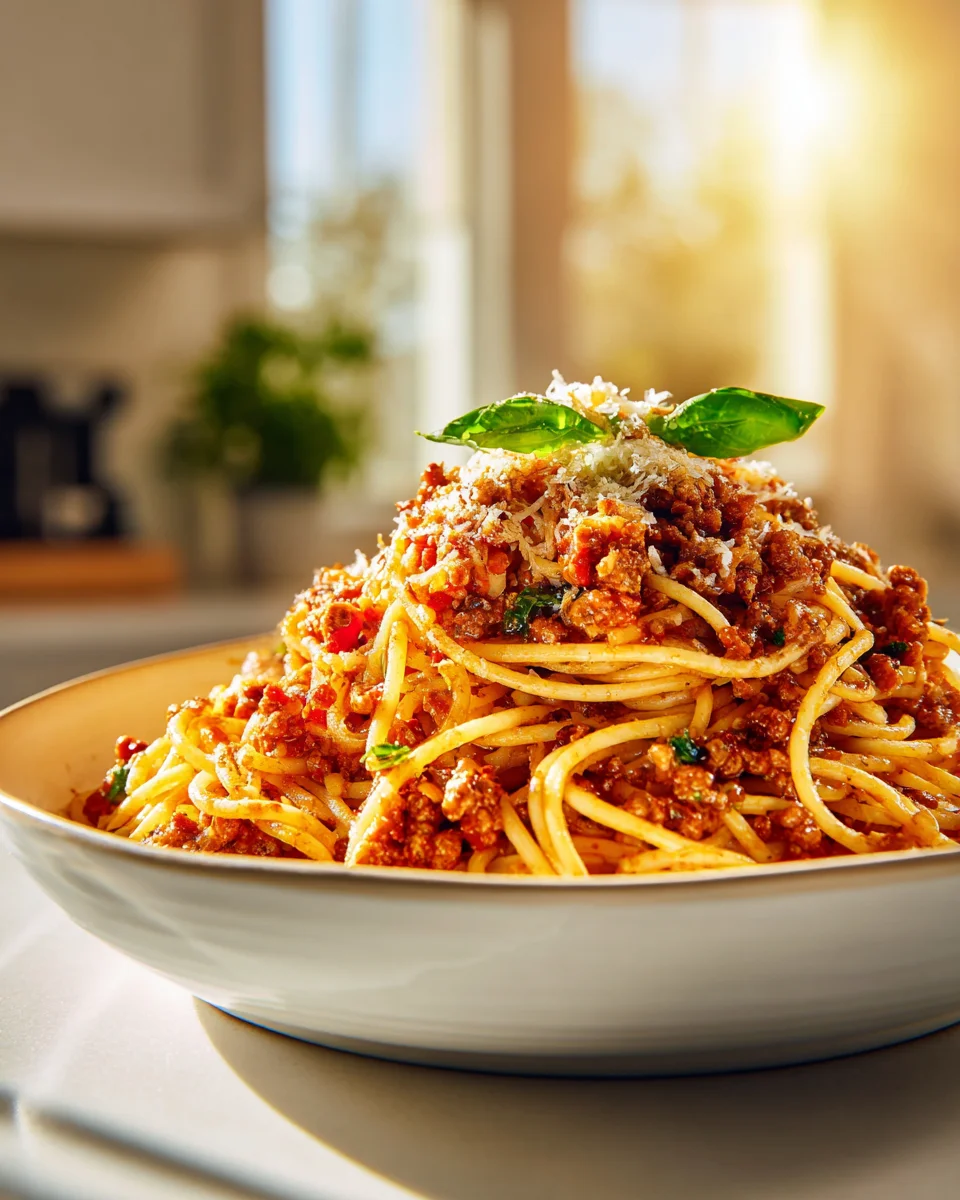
Classic Spaghetti Bolognese
Classic Spaghetti Bolognese is, for me, the ultimate comfort food. It’s not just a dish; it’s a warm embrace on a plate, a recipe that brings smiles and full bellies every single time. What makes my version truly special is the dedication to building deep, rich flavors, ensuring every mouthful is packed with deliciousness. We’re talking about a sauce that simmers to perfection, turning simple ingredients into something extraordinary.
You are absolutely going to love this recipe because it strikes that perfect balance between hearty satisfaction and sophisticated flavor. It’s comforting enough for a weeknight family dinner but impressive enough to serve to guests. Plus, mastering a classic Bolognese is a rite of passage for any home cook, and I promise you, this recipe makes it achievable and incredibly rewarding.
So, what exactly are we diving into? Imagine a luxuriously rich and savory beef sauce, slow-cooked until incredibly tender, infused with aromatic vegetables, sweet tomatoes, and a special blend of non-alcohol alternatives that enhance its depth without the need for wine. This magnificent sauce is then generously spooned over perfectly al dente spaghetti, creating a symphony of textures and tastes that’s simply unforgettable. Get ready to fall in love with your new go-to comfort meal!

Ingredient Notes
Crafting a truly classic Spaghetti Bolognese begins with understanding the purpose and quality of each ingredient. It’s more than just a meat sauce; it’s a symphony of slow-cooked flavors. Here’s what you’ll need to create that authentic, deeply satisfying taste, with a few notes on why they’re important.
- Ground Beef: For a classic Bolognese, I always recommend using a good quality ground beef with about a 15-20% fat content. This ratio provides ample flavor and moisture without making the sauce overly greasy. Many traditional recipes might feature a mix of meats, including pork, but for our beef-focused classic, a single-source beef works beautifully. If you prefer a leaner sauce, you can opt for 10% fat beef, but be prepared to potentially add a little extra olive oil during the initial browning stage to ensure it doesn’t dry out.
- Sofrito (Onion, Carrot, Celery): This aromatic trio is the foundational flavor base of almost all Italian meat sauces, and Bolognese is no exception. Diced finely and sautéed until tender and slightly caramelized, they lend a subtle sweetness and depth that is indispensable. Don’t rush this step; properly cooked sofrito is key to the sauce’s complexity.
- Tomato Paste: This concentrated burst of tomato flavor is essential. Cook it for a minute or two with the sofrito and garlic before adding liquids; this caramelizes the sugars and deepens its flavor, removing any raw, metallic taste.
- Crushed Tomatoes: Opt for high-quality canned crushed tomatoes. San Marzano tomatoes, if you can find them, are often considered the gold standard due to their sweet, less acidic flavor. They provide the bulk of the tomato richness without overwhelming the other flavors.
- Beef Broth: In place of wine, a good quality beef broth or stock provides the necessary liquid for simmering and adds another layer of savory depth. Choose a low-sodium option so you can control the seasoning of your sauce. It helps to deglaze the pan and forms the liquid base for that long, slow simmer.
- Milk: This might surprise some, but a splash of whole milk is a traditional addition to Bolognese. It helps tenderize the meat, balances the acidity of the tomatoes, and contributes to the sauce’s characteristic rich, creamy texture. Don’t skip it if you want that authentic touch!
- Aromatics & Seasonings: Fresh garlic, bay leaf, and dried oregano are my go-to’s. A pinch of nutmeg is also a surprisingly traditional and wonderful addition that subtly enhances the meat’s flavor. Salt and freshly ground black pepper, of course, to taste.
- Olive Oil: Good quality extra virgin olive oil for sautéing.
- Spaghetti: While other pasta shapes can certainly hold a meat sauce, for “Spaghetti Bolognese,” spaghetti is the star. Choose a good quality durum wheat spaghetti that will stand up to the hearty sauce.
- Parmesan Cheese (Parmigiano Reggiano): Freshly grated Parmesan is non-negotiable for serving. Its salty, umami notes perfectly complement the rich sauce.
Substitutions to Note: While I’ve focused on beef for our classic recipe, you could, of course, use other ground meats like lamb for a different take. For the liquid, instead of beef broth, you could use vegetable broth if you prefer, though the beef broth really enhances the meat flavor. Always taste and adjust as you go!
Step-by-Step Instructions
Patience is truly a virtue when it comes to a classic Bolognese. The magic happens during the long, slow simmer. Here’s how I bring it all together:
- Prep Your Veggies (Sofrito): First things first, get your aromatics ready. Finely dice your onion, carrots, and celery. The finer you dice them, the more they will melt into the sauce, creating a smoother texture. Mince your garlic as well.
- Brown the Beef: In a large, heavy-bottomed pot or Dutch oven, heat a tablespoon or two of olive oil over medium-high heat. Add your ground beef, breaking it up with a spoon. Cook until it’s beautifully browned all over, about 7-10 minutes. This browning is crucial for flavor development! Once browned, drain off any excess fat from the pot – you want flavor, not grease. Set the browned beef aside.
- Sauté the Sofrito: Reduce the heat to medium. Add another tablespoon of olive oil to the same pot if needed, then add your diced onion, carrots, and celery. Sauté gently, stirring occasionally, until the vegetables are very tender and translucent, about 8-10 minutes. This slow cooking allows their natural sweetness to develop.
- Build the Flavor Base: Add the minced garlic to the softened vegetables and cook for another minute until fragrant. Then, stir in the tomato paste. Cook, stirring constantly, for about 2-3 minutes. This step, often called “cooking out” the tomato paste, deepens its flavor and removes any raw acidity.
- Deglaze and Reintroduce Beef: Pour in about half a cup of your beef broth. Use a wooden spoon to scrape up any browned bits stuck to the bottom of the pot – this is called deglazing, and those bits are packed with flavor! Stir the browned ground beef back into the pot with the vegetables.
- Add Liquids and Seasonings: Stir in the crushed tomatoes, the remaining beef broth, bay leaf, dried oregano, and a pinch of nutmeg. Season generously with salt and freshly ground black pepper. Give everything a good stir to combine.
- The Long Simmer: Bring the sauce to a gentle simmer. Once simmering, reduce the heat to the lowest setting, cover the pot loosely (leaving a small gap for steam to escape), and let it cook for at least 2 to 3 hours, or even longer – up to 4 hours is fantastic. Stir occasionally to prevent sticking and ensure even cooking. The longer it simmers, the more the flavors will meld and deepen, and the meat will become incredibly tender. About 30 minutes before the end of the simmering time, stir in the whole milk. It will tenderize the meat and add a wonderful richness to the sauce.
- Cook the Spaghetti: When your Bolognese sauce is nearly done, bring a large pot of heavily salted water to a rolling boil. Add your spaghetti and cook according to package directions until al dente – meaning it’s firm to the bite.
- Combine and Serve: Before draining the spaghetti, reserve about a cup of the starchy pasta water. Drain the spaghetti and add it directly to your Bolognese sauce. Toss everything together, adding a splash of the reserved pasta water if needed to help the sauce cling beautifully to the pasta. Serve immediately in warm bowls, topped generously with freshly grated Parmesan cheese.
Tips & Suggestions
To really elevate your Classic Spaghetti Bolognese, I’ve got a few extra tips and suggestions I always follow:
- The Power of Patience: I cannot stress this enough – the longer your Bolognese simmers on a low heat, the better it will be. Those 2-4 hours allow the flavors to truly develop and marry, transforming simple ingredients into something extraordinary. Don’t rush it!
- Finely Diced Sofrito: While some prefer chunky sauces, for a classic Bolognese, aim for a very fine dice on your onion, carrots, and celery. This allows them to melt into the sauce, contributing their flavor without being overtly textural. You can even grate them on a box grater for an incredibly smooth sauce, which is a common trick.
- Don’t Skimp on the Fat (Initially): While you’ll drain excess fat from the ground beef, ensure you have enough olive oil when sautéing your sofrito. Fat is a flavor carrier, and properly sautéing the vegetables in a bit of oil makes a huge difference.
- Seasoning in Layers: Taste your sauce throughout the cooking process. Season the beef when browning, season the sofrito, and then adjust the salt and pepper in the final sauce. This layering of seasoning ensures a well-balanced flavor profile.
- Pasta Water is Gold: That starchy water from cooking your spaghetti is a secret weapon! When you combine the pasta with the sauce, adding a ladleful of pasta water helps to emulsify the sauce, making it cling beautifully to each strand of spaghetti and enriching the overall dish.
- Make Ahead for Best Flavor: Bolognese is one of those dishes that tastes even better the next day. The flavors have more time to deepen and meld. Consider making a large batch a day in advance for optimal taste.
- A Touch of Nutmeg: It might sound unusual, but a small pinch of freshly grated nutmeg is a classic addition to Bolognese. It subtly enhances the richness of the meat and adds a warming, almost mysterious depth to the sauce. Don’t overdo it, though!
- Serve It Right: Italians typically don’t drown their pasta in sauce. Instead, they toss the cooked pasta directly into the sauce in the pan, allowing each strand to be coated evenly before serving. A generous dusting of Parmesan follows.
Storage
One of the best things about Classic Spaghetti Bolognese is how well it stores, often tasting even better the next day!
- Refrigeration: Once cooled completely, transfer the Bolognese sauce (separate from the spaghetti, if possible) to an airtight container. It will keep beautifully in the refrigerator for up to 3-4 days. Cooked spaghetti, when stored separately, will last about the same amount of time.
- Freezing: Bolognese sauce is an excellent candidate for freezing. Allow the sauce to cool completely before transferring it to freezer-safe containers or heavy-duty freezer bags. I like to portion it into single or double servings for easy thawing. It can be stored in the freezer for up to 3 months without any loss of quality. Thaw overnight in the refrigerator before reheating.
- Reheating:
- From Refrigerator: Gently reheat the sauce in a saucepan over medium-low heat, stirring occasionally, until warmed through. If it seems a little thick, you can add a splash of beef broth or water to loosen it up.
- From Freezer: Thaw the sauce in the refrigerator overnight. Once thawed, reheat as you would from the refrigerator.
- Cooked Pasta: If you have leftover cooked spaghetti with the sauce mixed in, it’s best to reheat it gently in a pan with a splash of water or broth to prevent it from drying out. While it’s safe to freeze pasta with sauce, the texture of the pasta can sometimes become a bit softer upon reheating. For the best experience, I recommend cooking fresh spaghetti for your reheated sauce.
Final Thoughts
I hope you’ve enjoyed this journey into creating a truly comforting and deeply flavorful dish. There’s something incredibly satisfying about bringing a bowl of Classic Spaghetti Bolognese to the table, knowing you’ve crafted it from scratch. It’s more than just a meal; it’s an experience, a warm hug in a bowl that evokes pure culinary joy.
This particular recipe for Classic Spaghetti Bolognese is a must-try because it truly encapsulates the heart of Italian comfort food. The slow simmer transforms simple ingredients into a rich, robust beef ragu, where every spoonful is bursting with savory goodness. The depth of flavor from our perfectly browned beef, aromatic vegetables, and rich tomato base, all melding together over hours, creates an unparalleled taste that store-bought sauces simply can’t replicate. It’s a testament to the magic of patient cooking, yielding a sauce that clings beautifully to the spaghetti, making every bite utterly delicious.
So go ahead, tie on your apron, and let the inviting aromas fill your kitchen. I promise you, the effort is incredibly rewarding, and you’ll find yourself returning to this Classic Spaghetti Bolognese recipe time and time again. Enjoy every magnificent mouthful!
Best Ever Spaghetti Bolognese with Rich Beef Sauce Recipe
- Total Time: 24 minute
- Yield: 4 servings
Description
This Classic Spaghetti Bolognese is the ultimate comfort food, featuring a luxuriously rich and savory beef sauce. Slow-cooked to perfection, it transforms simple ingredients into an unforgettable meal.
Ingredients
- Ground Beef
- Onion
- Carrot
- Celery
- Garlic
- Tomato Paste
- Crushed Tomatoes
- Beef Broth
- Milk
- Bay Leaf
- Dried Oregano
- Nutmeg
- Salt
- Freshly Ground Black Pepper
- Olive Oil
- Spaghetti
- Parmesan Cheese (Parmigiano Reggiano)
Instructions
- Prep Your Veggies (Sofrito): First things first, get your aromatics ready. Finely dice your onion, carrots, and celery. The finer you dice them, the more they will melt into the sauce, creating a smoother texture. Mince your garlic as well.
- Brown the Beef: In a large, heavy-bottomed pot or Dutch oven, heat a tablespoon or two of olive oil over medium-high heat. Add your ground beef, breaking it up with a spoon. Cook until it's beautifully browned all over, about 7-10 minutes. This browning is crucial for flavor development! Once browned, drain off any excess fat from the pot – you want flavor, not grease. Set the browned beef aside.
- Sauté the Sofrito: Reduce the heat to medium. Add another tablespoon of olive oil to the same pot if needed, then add your diced onion, carrots, and celery. Sauté gently, stirring occasionally, until the vegetables are very tender and translucent, about 8-10 minutes. This slow cooking allows their natural sweetness to develop.
- Build the Flavor Base: Add the minced garlic to the softened vegetables and cook for another minute until fragrant. Then, stir in the tomato paste. Cook, stirring constantly, for about 2-3 minutes. This step, often called 'cooking out' the tomato paste, deepens its flavor and removes any raw acidity.
- Deglaze and Reintroduce Beef: Pour in about half a cup of your beef broth. Use a wooden spoon to scrape up any browned bits stuck to the bottom of the pot – this is called deglazing, and those bits are packed with flavor! Stir the browned ground beef back into the pot with the vegetables.
- Add Liquids and Seasonings: Stir in the crushed tomatoes, the remaining beef broth, bay leaf, dried oregano, and a pinch of nutmeg. Season generously with salt and freshly ground black pepper. Give everything a good stir to combine.
- The Long Simmer: Bring the sauce to a gentle simmer. Once simmering, reduce the heat to the lowest setting, cover the pot loosely (leaving a small gap for steam to escape), and let it cook for at least 2 to 3 hours, or even longer – up to 4 hours is fantastic. Stir occasionally to prevent sticking and ensure even cooking. The longer it simmers, the more the flavors will meld and deepen, and the meat will become incredibly tender. About 30 minutes before the end of the simmering time, stir in the whole milk. It will tenderize the meat and add a wonderful richness to the sauce.
- Cook the Spaghetti: When your Bolognese sauce is nearly done, bring a large pot of heavily salted water to a rolling boil. Add your spaghetti and cook according to package directions until al dente – meaning it's firm to the bite.
- Combine and Serve: Before draining the spaghetti, reserve about a cup of the starchy pasta water. Drain the spaghetti and add it directly to your Bolognese sauce. Toss everything together, adding a splash of the reserved pasta water if needed to help the sauce cling beautifully to the pasta. Serve immediately in warm bowls, topped generously with freshly grated Parmesan cheese.
- Prep Time: 15 mins
- Cook Time: 3-4 hours
- Category: Dinner
- Method: Cooking
- Cuisine: Italian
Nutrition
- Serving Size: 1 bowl
- Calories: 600
- Sugar: 8 g
- Sodium: 700 mg
- Fat: 30 g
- Saturated Fat: 10 g
- Unsaturated Fat: 15 g
- Trans Fat: 0 g
- Carbohydrates: 60 g
- Fiber: 4 g
- Protein: 35 g
- Cholesterol: 90 mg
Keywords: To elevate your Bolognese, allow it to simmer longer for better flavor development. Finely dice your sofrito for a smoother sauce, and don't skimp on the olive oil for sautéing. Remember to taste and season throughout the cooking process for a well-balanced flavor.